The "Insulating Wood" Hidden Inside Transformers:TheWonderful World of Electrical Laminated Wood
Behind every kilowatt-hour of electricity we use in our daily lives lies a wealth of little-known cutting-edge material technology. As the current travels from a power plant thousands of miles away, passing through multiple stages of voltage step-up and step-down before finally reaching the outlet in your home, every voltage transformation it undergoes inside the transformer relies on a special type of “wood” that quietly safeguards the process—this is electrical laminated wood.
When many people first hear this name, they wonder: Doesn’t wood conduct electricity? Why can it be used inside a transformer filled with high-voltage electricity? This is precisely what makes electrical laminated wood so remarkable: it completely overturns our understanding of ordinary wood, transforming natural wood into a specialized engineering material that possesses both exceptional mechanical strength and reliable insulating properties.
1.The Transformation from Ordinary Birch Wood to Power-Grade Insulation Material
The creation of electrical laminated wood is a “targeted modification process” of natural timber.
The first step in its manufacture is selecting high-quality white birch—with the appropriate tree age, few branches, and extremely low resin content—as the base material.
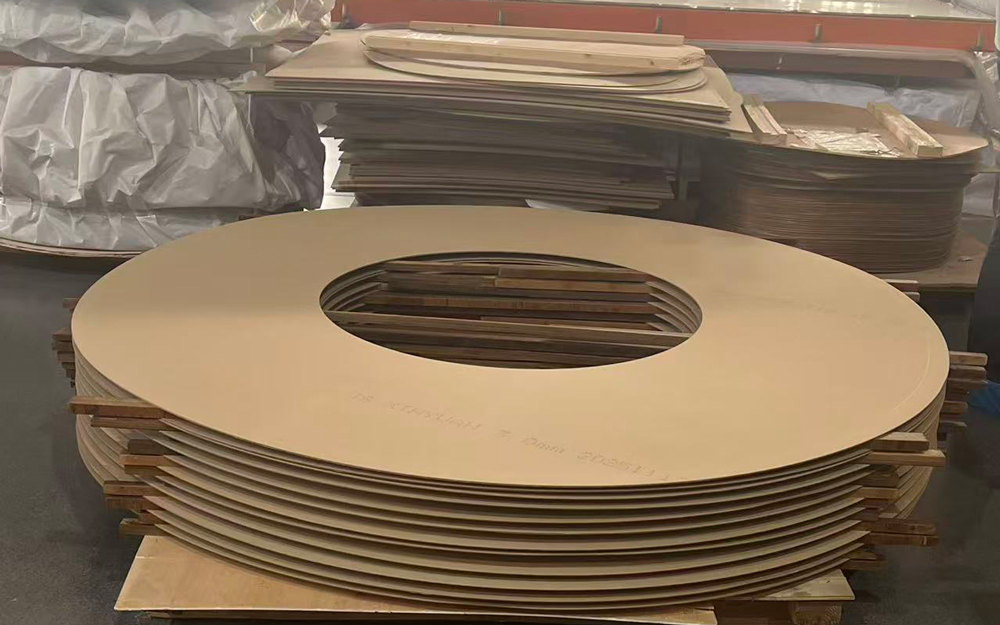
This wood is slightly alkaline by nature, so it does not contaminate transformer oil nor cause the acid value of insulating oil to rise during long-term use, making it an ideal raw material. After the logs are steamed to soften them, they are rotary-cut—much like shaving pencil shavings—into uniform veneers just 1–2 millimeters thick. These are then subjected to a thorough drying process to control the wood’s moisture content at an extremely low level. These paper-thin wood slices then undergo two rounds of impregnation with insulating resin, ensuring that every wood fiber is thoroughly saturated with a specially formulated electrical adhesive. They are then stacked layer by layer in a “cross-grain” pattern—arranging each layer so that the grain runs perpendicular to the next—to completely eliminate the natural weakness of wood, where strength is greater along the grain and weaker across it. Finally, these stacked wood blanks are fed into a hot press capable of exerting thousands of metric tons of pressure. They are held under specific high-temperature and high-pressure conditions for several hours, allowing the resin to fully cure and firmly compressing hundreds of layers of veneer into a dense, void-free solid panel. After cutting, sanding, and precision machining, what was once ordinary birch wood is completely transformed into electrical laminated wood capable of withstanding high pressure and bearing loads of several metric tons.
2.Why Does It Serve as the “Core Frame” of a Transformer?
Inside oil-immersed transformers, laminated electrical wood is by far the most commonly used structural insulation material, thanks to several unique advantages that make it irreplaceable.
✅ 1. Near-Perfect Compatibility with Transformer Oil
The dielectric constant of laminated wood is extremely close to that of mineral transformer oil.
This means no electric field concentration will occur at the oil-solid interface, allowing the high-voltage electric field to distribute far more evenly across the insulation system. It fundamentally cuts down the risk of partial discharge inside the equipment — a critical performance advantage that many competing insulating materials simply cannot match.
✅ 2. Exceptional Mechanical Strength for Long-Term Structural Stability
Hot-pressed laminated electrical wood delivers a flexural strength far higher than ordinary insulating paperboard and many composite insulation panels.
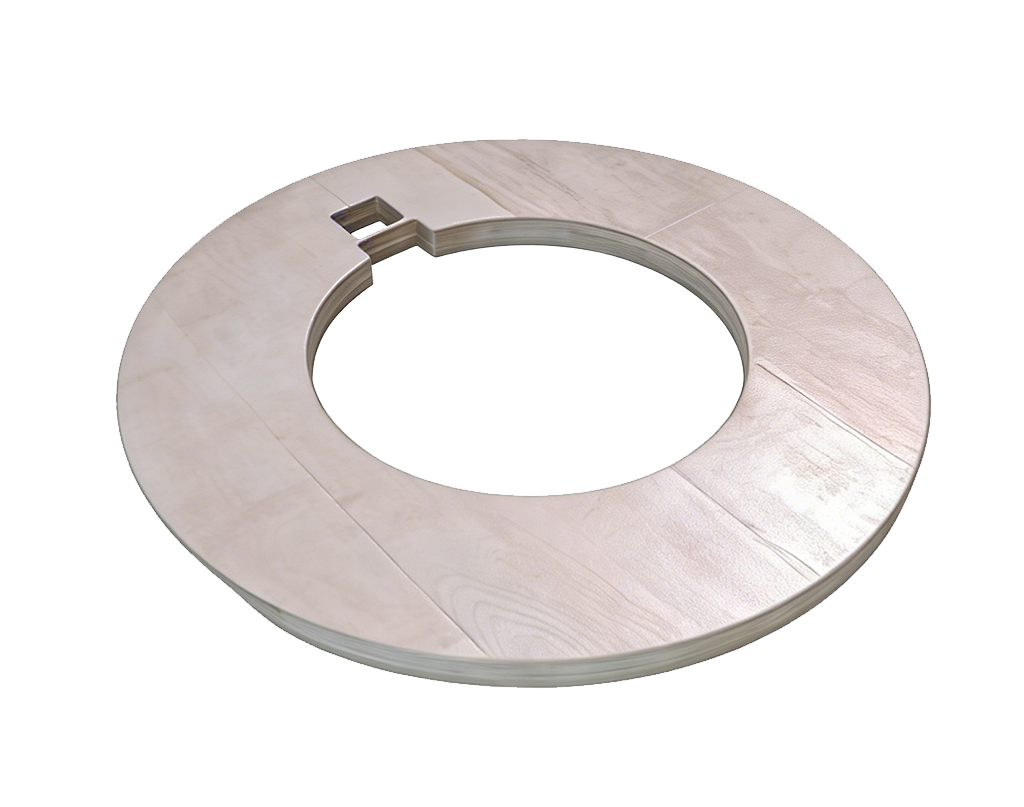
Coil clamping plates machined from this material can firmly lock transformer windings weighing several metric tons in place. Even after decades of continuous operation and countless thermal expansion and contraction cycles, the structure will not easily deform, shift or loosen, effectively preventing hidden faults caused by displaced internal insulation components.
✅ 3. Outstanding Machinability for Customized Production
It supports full precision processing workflows including turning, milling, drilling and planing using standard woodworking equipment, no special industrial tools required.
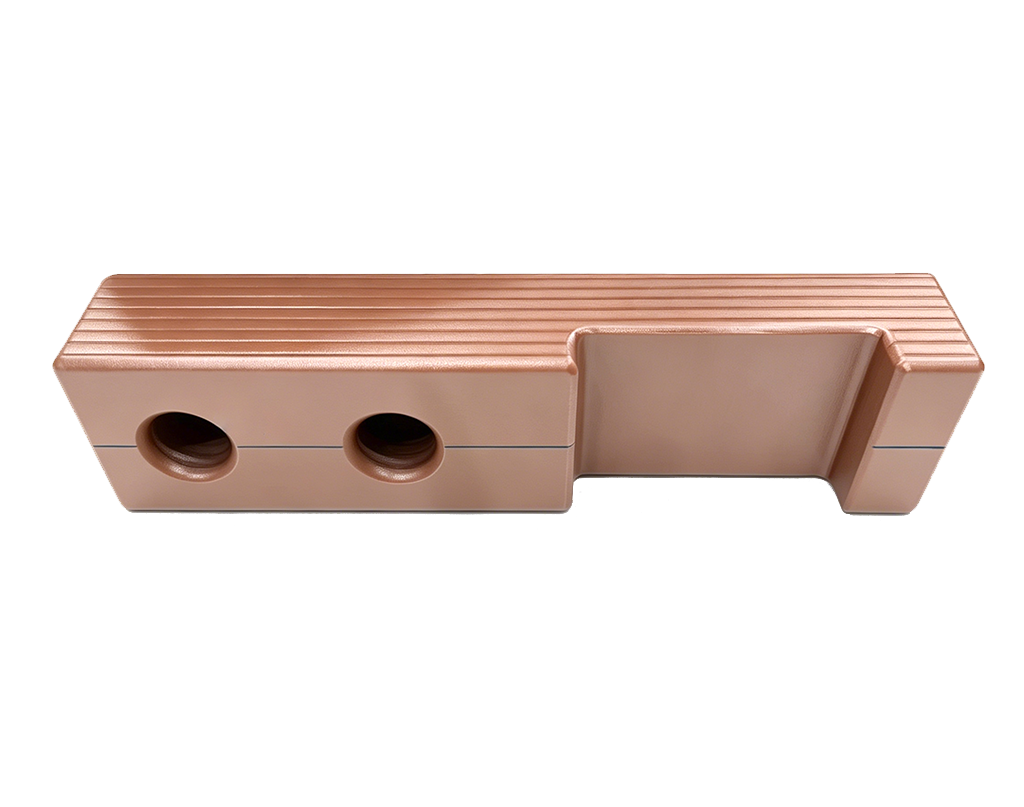
No delamination, edge chipping or internal cracking will occur during processing, allowing engineers to efficiently fabricate complex-shaped parts such as lead supports, core shims and transformer clamp components, perfectly tailored to the installation requirements of transformers across all voltage classes and sizes.
✅ 4. Reliable Long-Term Performance in Harsh Operating Environments
It maintains stable operation for decades in transformer oil at a continuous working temperature of 105°C (Class A insulation rating).
Its dielectric loss changes very gently even under sustained high temperatures. Even after prolonged vacuum drying treatment during manufacturing, the material will not suffer from delamination, bubbling or cracking, supporting a typical service life of over 30 years for power grid equipment.
3.It has quietly transformed the entire transformer industry.
As early as the 1980s, many domestic transformer manufacturers were still extensively using insulating paperboard and epoxy-impregnated glass cloth panels to manufacture internal support components. However, engineers soon discovered that insulating paperboard was prone to delamination under long-term stress, while epoxy-impregnated glass cloth panels were not only heavy and expensive but also had a dielectric constant significantly different from that of transformer oil, which easily led to uneven electric field distribution. As the technology for domestically produced electrical laminated wood gradually matured, it quickly became the industry’s “new favorite.”
Replacing traditional materials with it reduced the overall weight of transformers by more than 15%, significantly lowered material procurement costs, and further enhanced the long-term operational stability of the equipment. Today, from 10 kV distribution transformers to large main transformers rated at several hundred kilovolts, electrical laminated wood can be found inside nearly all oil-immersed power equipment.
From underground substations in cities to transmission towers in remote mountainous areas, and even to step-up substations on offshore wind farms, this remarkable insulating material—derived from wood—is quietly underpinning the safe operation of the entire power grid. It has no dazzling appearance and rarely comes into public view, yet it is the indispensable “invisible skeleton” that underpins modern power systems. The next time you see a transformer by the roadside, take a moment to consider that inside its metal casing lies a piece of this time-tested “super wood,” silently safeguarding every light in your home and every kilowatt-hour of electricity.